When the Music Stops: The Future of NATO
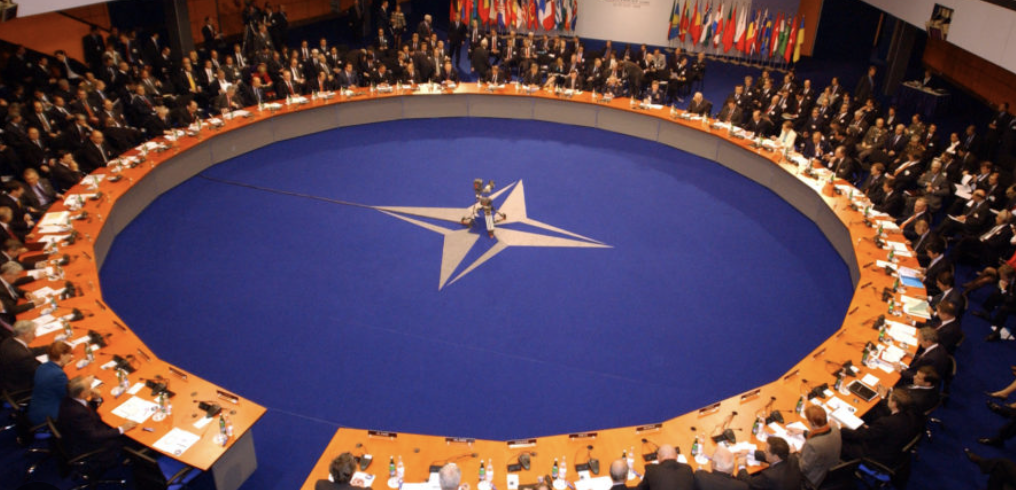
International relations and social dancing are alike. In dancing, after one song ends, partners change. In international relations, once circumstances change, alliances do too. Dance partners have an interest in moving together so long as the music plays. Alliances have a national interest in fighting together so long as the threat remains. The NATO alliance has lasted 77 years, but one day the music will stop.
History shows that alliances do not last forever. States that fought each other in one era were allies in the next. During the Napoleonic Wars, Great Britain, Russia, and the Germanic states fought against France. Then in World War I, Russia, Great Britain, and France fought against Germany. In World War II, the United States waged total war against Germany and Japan. Today, all three countries are treaty allies. As circumstances changed, so did alliances.
The circumstances that created NATO are gone. NATO was formed by the United States to counter the Soviet Union, its former ally. At the time, the Soviet Union was a major military power that threatened to conquer Western Europe. Russia, the Soviet Union’s successor, does not pose the same threat. Its stalled offensives in Ukraine reveal the limits of its military power. Without the common threat that formed it, NATO’s necessity has diminished.
Further reducing NATO’s necessity is the rearmament of its members. Paradoxically, as NATO countries get stronger, the alliance gets weaker. This is not merely theoretical. Dr. James D. Morrow, Professor of Political Science at the University of Michigan, finds statistical evidence supporting this point. Alliances formed between 1815 and 1965 were more likely to break when the military capabilities of their members changed.
NATO’s members are rearming rapidly. In 2026, all 32 members of the alliance are meeting or exceeding the 2 percent GDP threshold for defense spending. This is a sharp increase from 2014, when only three members met it. For the first time since 1950, Germany is undergoing a massive military buildup. By 2039, Germany expects to replace the United States as the strongest conventional force in Europe. As European states become capable of providing for their own security, the need for NATO diminishes, especially since alliances come with risk.
One of the central risks of alliances is entrapment in a partner’s conflict. According to NATO Article 5, “an attack on one is an attack on all,” obliging each member to risk blood and treasure even in conflicts that may be at odds with its national interest. This has led some U.S. lawmakers to question the wisdom of remaining in NATO.
However, the dance between NATO members is not over yet. Europe will still rely on the United States for critical enablers such as airlift, aerial refueling, and space-based intelligence, surveillance, and reconnaissance capabilities for at least another decade. Likewise, the United States will rely on bases in the territory of NATO members to project power and sustain operations abroad. Shared culture, history, values, and religion also help bind the alliance together. Even so, in time, NATO countries will possess the capabilities to operate independently without the need for the broader alliance or its accompanying risks. Nor has common culture preserved alliances in the past. For instance, the Holy Alliance among Austria, Prussia, and Russia broke down despite the moral and ethical ties between them.
British Prime Minister Lord Palmerston summed up the truth of alliance dynamics when he said there are no “eternal allies, and no permanent enemies.” One day, the NATO alliance will end. History shows that when the conditions that created an alliance disappear, the alliance eventually breaks. As the international environment evolves, so too will the circumstances that bind NATO together. The dance may continue for years to come, but no song lasts forever.
